

The Human Side of Textile Production

It’s easy to think of clothing as something simple—something we choose, wear, and replace. But behind every item is a process that involves real people, long hours, and unseen labor. The human side of textile production is often overlooked, even though it exists in every piece of clothing we own.
Morning: Before the Day Begins
It’s early. The day hasn’t fully started, but the routine already has.
For many garment workers, the morning begins long before the factory doors open. Commuting can take hours, often in crowded or unreliable conditions. By the time the workday begins, energy is already being spent. The journey itself becomes part of the workload, adding time and effort before paid labor even begins.
The goal is simple: arrive on time, keep up, and avoid falling behind before the day even starts. Being late or missing work can have consequences, making consistency essential. There is little room for flexibility, and mornings are often shaped by the need to stay on schedule. This creates a routine where preparation for work begins long before the actual tasks do. Over time, this repetition becomes normalized, even though it requires constant effort.
Midday: Inside the Factory
By midday, the pace has settled—but it doesn’t slow down.
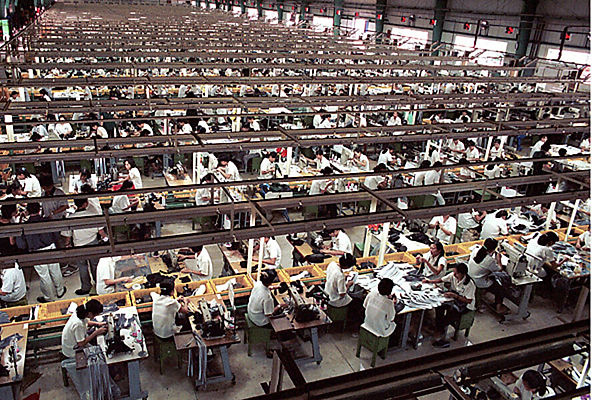
Factories are often loud, fast-moving environments where tasks are repetitive and constant. Workers may spend hours completing the same motion, focusing on speed and precision to meet daily targets. Breaks are limited, and the pressure to maintain output remains steady. The environment is structured to prioritize productivity above all else, meaning that efficiency becomes the defining feature of the workday.
Over time, repetition shapes both the physical and mental experience of the job. Small actions are repeated hundreds of times, requiring focus and endurance. There is little variation in tasks, and the rhythm of the work is dictated by production demands rather than individual pacing. This can make time feel extended, as progress is measured in output rather than moments.
The environment is not designed for comfort. It is designed for efficiency.
“You don’t think about the clothes—you think about keeping up.”
This mindset reflects how the system operates. The focus is not on the final product, but on meeting expectations within the process itself.


Afternoon: The Pressure Builds
As the day continues, expectations increase.
Production targets must be met, and delays can affect entire supply chains. Supervisors monitor progress closely, ensuring that timelines are followed. The faster the production cycle, the quicker clothing reaches stores—and the lower the cost remains. This creates a system where speed is directly connected to pricing, reinforcing the demand for constant output.
As deadlines approach, the pressure becomes more noticeable. Workers must maintain consistency even as fatigue builds, balancing accuracy with speed. Mistakes can slow production, so attention must remain high throughout the day. This sustained focus adds to the overall intensity of the work, making the later hours of the day more demanding than they initially appear.
This pressure shapes the entire system. Speed becomes the priority, often at the expense of rest, flexibility, or individual well-being. It influences not just how work is done, but how time is experienced within the environment.
Evening: The Day Doesn't Fully End
When the workday ends, the effects of it don’t.
After long hours, workers return home physically tired and mentally drained. For many, the next day will look exactly the same—another early morning, another cycle of production. Recovery time is limited, and there is often little opportunity to fully rest before the routine begins again.
The repetition of this cycle makes it difficult to separate one day from the next. Work extends beyond the factory in the form of fatigue, both physical and mental. Even outside of working hours, the effects of the day remain present. This creates a continuous rhythm where rest is brief and preparation for the next day begins almost immediately.
There is little separation between days, and little time to recover before the process repeats. Over time, this consistency becomes part of the structure of daily life.
Stepping Back: A Larger System
This is not just one story. It reflects a much larger global system.
Millions of workers around the world are part of the textile and garment industry, contributing to the production of clothing that is sold and consumed globally. Their labor makes fast fashion possible, allowing for low prices and constant availability. Without this scale of human effort, the speed and accessibility of modern fashion would not exist in the same way.
At the same time, their role often remains unseen by consumers. The focus stays on the final product rather than the process behind it. This creates a disconnect between consumption and production, where the human element is rarely considered in everyday decisions.
Understanding this system does not necessarily change the existence of fast fashion, but it does change how it is viewed. It highlights the complexity behind something that is often treated as simple, and it brings attention to the people who make it possible.